When people start a limited company, accounting is rarely their first concern.
Most directors focus on finding customers, winning contracts, delivering work, and keeping cash flow steady. The paperwork often gets set aside until a tax deadline approaches or a warning letter arrives from HMRC. What seems manageable at first can quickly become complicated as the company grows.
According to UK Government business statistics, approximately 5.5 million private sector businesses are operating in the UK as of 2024, with limited companies accounting for roughly 3.3 million of them. Every year, company directors receive penalties for late filings, incorrect submissions, or poor record-keeping.
This leads many business owners to ask: Do I Need an Accountant for a Limited Company?
No, hiring an accountant is not a legal requirement in the UK. However, an accountant can save directors time and reduce the risk of costly mistakes by helping with annual accounts, Corporation Tax returns, bookkeeping, payroll, tax planning, and HMRC compliance.
In this guide, we’ll explain your legal responsibilities as a director, whether you can handle your own accounts, and when hiring an accountant makes sense financially.
What Are Your Legal Obligations as a Limited Company?
Running a limited company in the UK comes with responsibilities you cannot ignore. As a director, you need to keep accurate financial records, file annual accounts with Companies House, submit Corporation Tax returns to HMRC, pay any taxes owed, and send a Confirmation Statement each year. If you have employees, you also need to handle payroll correctly.
Some directors think these tasks only matter once the company grows. That isn’t true. Whether your company earns £5,000 or £500,000, the rules remain the same. Even if your business barely trades during the year, you still need to submit your accounts and tax returns on time.
These obligations can feel overwhelming. That’s why many business owners think about getting professional help. The rules are manageable, but they require time and attention. Missing a deadline or making a submission error can lead to fines or added stress that most directors would prefer to avoid.
Can You Run a Limited Company Without an Accountant?
Yes, it is possible. Many directors manage their own bookkeeping, accounts, and tax returns, especially when their business is small. Today’s accounting software makes it easier to record transactions and submit information online, and some business owners prefer to have full control over their finances and enjoy learning how the system works.
The problem usually comes when a small business quickly grows into one with suppliers, contractors, payroll, and more complex tax planning. Suddenly, accounting becomes another job on top of everything else.
Hiring an accountant isn’t just about submitting forms. A good accountant can spot mistakes before they happen, highlight ways to save on tax, and help you stay organised throughout the year.
Benefits of Having an Accountant for a Limited Company
- Make sure your company meets HMRC and Companies House rules
- Reduces the chance of filing mistakes
- Saves time on bookkeeping and paperwork
- Helps with payroll and employee taxes
- Advises on tax planning to legally save money
- Keeps your accounts organised as your business grows
- Gives peace of mind that deadlines are being met
- Ensures compliance with the new 2026 requirements, like Director ID verification
You do not need an accountant to run a company. Many directors simply find life easier with one.
What Does an Accountant Actually Do for a Limited Company?
Ask a group of company directors what their accountant does, and you’ll probably hear different answers.
Some see accountants as people who deal with tax returns once a year. Others speak to theirs every month for advice on cash flow, expenses, and business decisions. In reality, a good accountant often becomes one of the most useful professional contacts a business owner has.
Here are some of the key ways an accountant supports a limited company.
1. Preparing Annual Accounts
Annual accounts must be submitted to Companies House each year. An accountant prepares these reports and ensures they meet the required standards before filing.
2. Filing Corporation Tax Returns
Corporation Tax returns can be a real headache for a lot of directors, a lot trickier than they ever expected. That’s where an accountant comes in to help you crunch those numbers, get the figures right and sort your returns so they get submitted on time.
3. Managing Your Bookkeeping
Good bookkeeping is all about keeping your financial records tidy; it makes a huge difference when it comes to getting a handle on how your business is doing and preparing for year-end reporting.
4. Handling Payroll
Once employees enter the picture, payroll becomes another responsibility. Accountants can manage PAYE, pension contributions, payslips, and submissions to HMRC.
5. Providing Tax Planning Advice
Paying the right amount of tax is important. Paying more than necessary is not. Accountants help directors structure their finances in a tax-efficient way while remaining compliant.
6. Keeping an Eye on Cash Flow
You might think that because a business is making a profit, it’s not going to have cash flow problems. But that’s not always the case. Keeping on top of your finances on a regular basis helps you pick up on any potential issues before they blow out of proportion.
7. Making Smart Business Decisions
Whether you’re thinking about taking on staff, buying a new piece of kit or expanding your services, having some good financial advice can make all the difference when it comes to making the right decision.
At MyIVA, our accountants assist limited companies with these tasks. This allows directors to spend less time on paperwork and more time on their business.
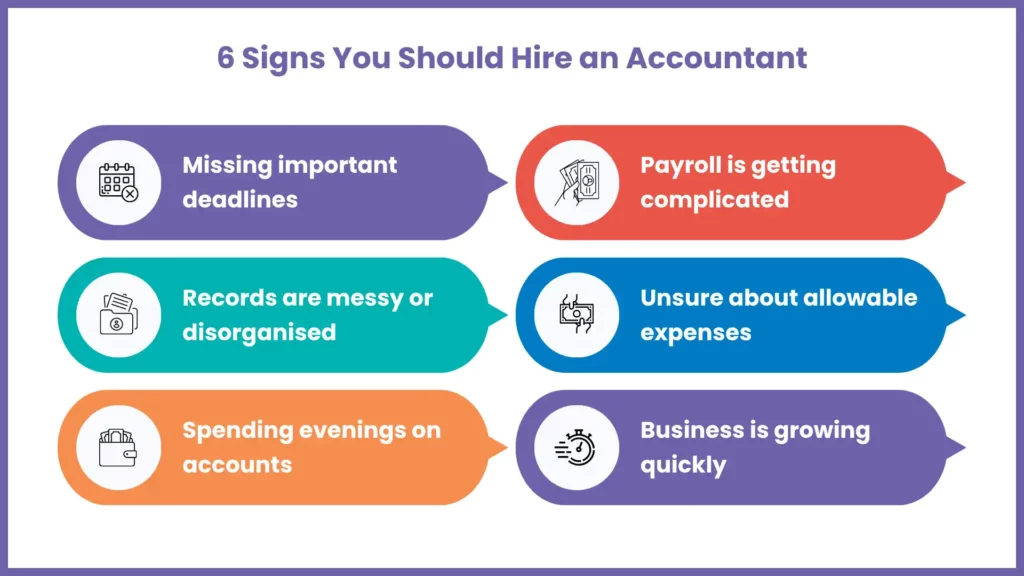
6 Reasons a Limited Company Owner Should Hire an Accountant
Many business owners only realise the value of an accountant after encountering a problem.
The following situations are common among growing companies.
1. You Miss Important Deadlines
When you’re busy serving customers and managing daily operations, filing dates can easily slip your mind. Unfortunately, HMRC and Companies House still expect everything to arrive on time.
2. Your Records Are Starting to Get Messy
A few misplaced receipts may not seem like a major issue. Over several months, however, disorganised records can make tax filing much more difficult.
3. You Spend Evenings Doing Accounts
Many directors finish a full day’s work only to spend another two hours updating spreadsheets. That time could often be better spent on business development or personal time.
4. Payroll Is Becoming Complicated
Hiring your first employee feels exciting. Managing payroll, pension contributions, and tax deductions often feels less exciting.
5. You Are Unsure Which Expenses Can Be Claimed
Questions about travel costs, equipment purchases, or working from home expenses are common. Guesswork is rarely a good strategy when taxes are involved.
6. The Business Is Growing Faster Than Expected
Growth is a good problem to have. Even so, more customers, more transactions, and more responsibilities usually mean more financial administration.
For many directors, hiring an accountant becomes less about compliance and more about gaining back valuable time.
How Much Does an Accountant Cost for a Limited Company?
One of the first questions directors ask after searching Do I Need an Accountant for Limited Company is how much professional support will cost.
There is no single answer because every business is different. A company with one director and a small number of transactions will usually require less support than a business with employees, payroll obligations, and larger volumes of activity.
To give you a clearer idea, here are the typical costs charged by accountants across the UK for limited company services.
Typical UK Accountant Costs for a Limited Company (2026)
| Service / Package | Typical Cost (UK Average) | What’s Usually Included |
| Self Assessment tax return only | £150–£350 per year | Personal tax filing for directors |
| Limited company accounts + CT600 | £500–£1,800 per year | Annual accounts and Corporation Tax filing |
| Monthly accounting package (basic) | £60–£250 per month | Accounts, CT600, compliance, basic support |
| VAT return support | £40–£150 per quarter | Quarterly VAT submissions |
| Payroll processing | £20–£75 per month | PAYE and employee tax reporting |
| Full small business retainer | £150–£500 per month | Bookkeeping, payroll, VAT, accounts |
While many accountants charge premium fees, affordable options are available for small businesses, sole traders, and company directors who only need specific services. MyIVA offers practical and affordable solutions designed for sole traders, individuals, and limited companies.
MyIVA Pricing Table
| Service | Description | Price |
| Self Assessment Tax Returns (SA100) | Personal tax return preparation and filing | One off £99 |
| Sole Trader | Bookkeeping support for sole traders | £25 |
| Tax Planning & Advisory | Personal tax return and advisory | £125 |
| Corporation Tax Services (CT600) | Corporation Tax preparation and filing | |
| Dormant Company | Filing for dormant companies | £75 |
| Starter Micro | Bookkeeping, payroll, annual accounts & support | Starts From £40 |
The right accountant should provide value that outweighs their fee. For many businesses, avoiding a single costly mistake can justify the investment.
What Happens If You Don’t Hire an Accountant?
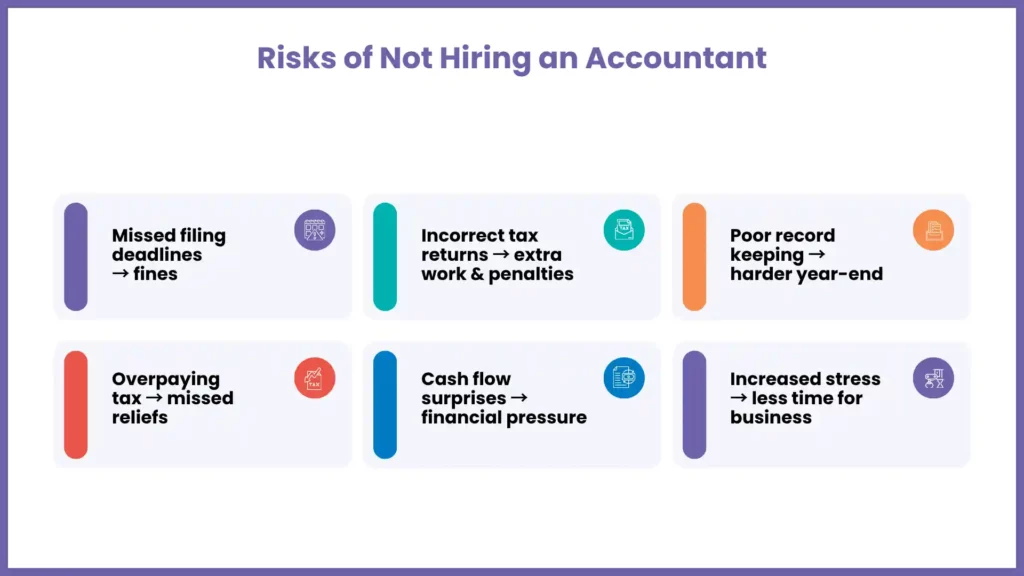
Choosing not to hire an accountant is entirely your decision. Plenty of directors manage successfully on their own. That said, there are some risks worth considering.
Missing Filing Deadlines
Deadlines arrive quickly, especially during busy periods. Late submissions can result in penalties and additional charges.
Incorrect Tax Returns
Even small mistakes can create issues later. Correcting errors often takes more time than getting things right in the first place.
Poor Record Keeping
Without a consistent system, receipts and financial records can become difficult to track.
Paying More Tax Than Necessary
Many directors miss legitimate deductions and allowances simply because they are unaware they exist.
Cash Flow Surprises
Unexpected bills can put pressure on a business. Accurate financial records help reduce surprises.
Increased Stress
Accounting tasks often become more stressful when deadlines approach and records are incomplete.
Less Time for Customers
Every hour spent dealing with accounts is an hour not spent serving clients or growing the company.
Managing accounts yourself is possible, but it does require commitment and attention to detail.
Is Hiring an Accountant Worth It for Your Limited Company?
For many business owners, yes. An accountant brings knowledge, experience, and support that can help reduce mistakes and save time. While there is a cost involved, many directors find the benefits outweigh the expense.
At MyIVA, we regularly speak with company owners who handled everything themselves when they first started trading. During the early months, this often worked well because activity was relatively low and there were fewer obligations to manage.
Things usually changed once the business gained momentum. More customers meant more invoices. More transactions meant more bookkeeping. In some cases, employees were hired and payroll responsibilities followed. What once took an hour or two each month suddenly required far more attention.
That is often when directors realise they would rather spend their time growing the company than worrying about filing dates and tax calculations. A trusted accountant helps remove that burden while keeping the business compliant.
See MyIVA’s Pricing & Get Started Today
Corporation Tax filing from £199. Self Assessment from £99. Speak to our team today.
FAQs: Frequently Asked Questions
Do I legally need an accountant for a limited company?
No, UK law does not require you to hire an accountant. However, directors are still responsible for keeping the books balanced, submitting tax returns on time, and managing all company filings.
Can I submit my own Corporation Tax return?
Yes, you can file your own Corporation Tax return with HMRC. Just make sure you get your calculations correct and claim all the right expenses and allowances to avoid errors.
When should I hire an accountant?
Many business owners find it helpful to hire an accountant when their workload gets heavier or their finances become more complex. It can also be beneficial when hiring employees, registering for VAT, or dealing with Corporation Tax for the first time.
Can an accountant help reduce my tax bill?
Yes, an accountant can help you find tax reliefs, allowable expenses, and planning opportunities that you may not know about. This helps ensure you do not overpay and only pay the taxes you legally owe.
Is an accountant useful for a small company?
Yes, even small companies can benefit from professional support, especially for staying compliant and meeting deadlines. An accountant can also save you time, letting you focus on running your business.
What are the new 2026 compliance requirements for limited companies?
As of 2026, all directors must complete mandatory identity verification with Companies House. Additionally, Making Tax Digital (MTD) for Income Tax begins rolling out in April 2026, requiring digital tax records.
Is it possible to change accountants mid-year?
Yes, you can switch accountants at any time. Your new accountant will usually request your records from the previous one, making the transition smooth. Just ensure deadlines are clear and your accounts are up to date.
Conclusion
Running a limited company is more than just serving customers and making money. What seems easy at first can quickly become stressful as your business grows. Getting professional help isn’t just about doing paperwork; it’s about cutting down stress, avoiding mistakes, and having someone to give you the right advice when you need it.
At MyIVA, we support sole traders, individuals, and limited companies with Corporation Tax, Self Assessment, bookkeeping, payroll, tax planning, and financial advice. Whether you’re just starting out or need help keeping your business on track, our team is here to make things easier for you.
Need help with your limited company accounts?
Contact MyIVA today to see how we can help keep your business organised, compliant, and prepared for growth.