Around £97 billion in Corporation Tax receipts was collected by HMRC during the latest financial year, showing how important Corporation Tax is for UK businesses and the economy. This figure is based on HMRC Corporation Tax Statistics 2025. Yet many company owners still feel confused about how to pay Corporation Tax online, what deadlines apply and which payment method is best for their business.
Missing a Corporation Tax payment deadline can lead to interest charges, penalties and unwanted pressure from HMRC. Many small business owners focus on filing their CT600 Company Tax Return but forget that paying the tax itself is a separate responsibility with its own deadline. Understanding the process properly can help businesses stay compliant and avoid unnecessary financial stress.
To pay Corporation Tax online in the UK, limited companies must use their 17-digit Corporation Tax payment reference number and make payment through HMRC-compatible methods such as Faster Payments bank transfer, Direct Debit (if eligible), online banking or CHAPS before the Corporation Tax payment deadline. Most businesses can manage payments through their HMRC Corporation Tax account (accessed via Government Gateway).
In this blog, you will learn:
- What is Corporation Tax, and when must it be paid
- Current Corporation Tax rates in the UK
- Important Corporation Tax payment deadlines
- How to pay Corporation Tax online step by step
- HMRC online payment methods available
- What happens if no Corporation Tax is due
- Common payment mistakes and how to avoid them
- What to do if you cannot pay on time
- Whether you should use an accountant for Corporation Tax support
What Is Corporation Tax & When Do You Need to Pay It?
Corporation Tax is the tax limited companies pay on their taxable profits in the UK. These profits can come from trading activities, investments or selling business assets. HMRC Corporation Tax rules apply to most UK limited companies and some foreign companies with UK operations.
Companies normally need to pay Corporation Tax within 9 months and 1 day after the end of their accounting period. This payment deadline is different from the CT600 Company Tax Return filing deadline, which is usually 12 months after the accounting period ends. Many businesses confuse these two dates, which can lead to late payment problems.
Even if your company has made no profit or no tax is due, you may still need to submit a Company Tax Return to HMRC. Understanding your UK limited company tax obligations early helps avoid penalties and keeps your business records organised.
Corporation Tax Rates in the UK (Quick Overview)
Understanding the current Corporation Tax rates is important before you pay Corporation Tax online. The amount your company pays depends on the level of taxable profits your business makes during the accounting period. Some companies qualify for marginal relief, which gradually increases the tax rate between the lower and upper profit thresholds.
Here are the current Corporation Tax rates in the UK:
| Company Profits | Corporation Tax Rate |
| Up to £50,000 | 19% |
| Over £250,000 | 25% |
Between £50,000 and £250,000 Marginal Relief Applies
For profits between £50,000 and £250,000, marginal relief gradually increases the effective tax rate from 19% towards 25%.
Associated companies can affect these thresholds, so businesses should always check their position carefully before submitting the CT600 Company Tax Return.
Knowing your correct Corporation Tax rate helps you estimate payments properly and avoid underpaying HMRC.
Corporation Tax Payment Deadlines You Must Know
One of the most common mistakes businesses make is missing the Corporation Tax payment deadline. Many company owners assume payment is due when the tax return is filed, but HMRC requires payment much earlier. Understanding these dates is very important for avoiding penalties and interest charges.
Below are the main Corporation Tax deadlines businesses should know:
| Requirement | Deadline |
| Corporation Tax payment | 9 months and 1 day after accounting period end |
| File CT600 online | 12 months after accounting period end |
| Quarterly instalment payments for Corporation Tax | Large companies may pay in quarterly instalments |
| Amend CT600 return | Within 12 months of filing deadline |
Large companies with higher profits may need to make quarterly instalment payments for Corporation Tax instead of one single payment. Generally, companies with taxable profits over £1.5 million must pay in quarterly instalments. Businesses should always monitor deadlines carefully through their HMRC Corporation Tax account.
Paying on time keeps your business compliant and helps avoid unnecessary financial pressure from HMRC.
How to Pay Corporation Tax Online in the UK (Step by Step)
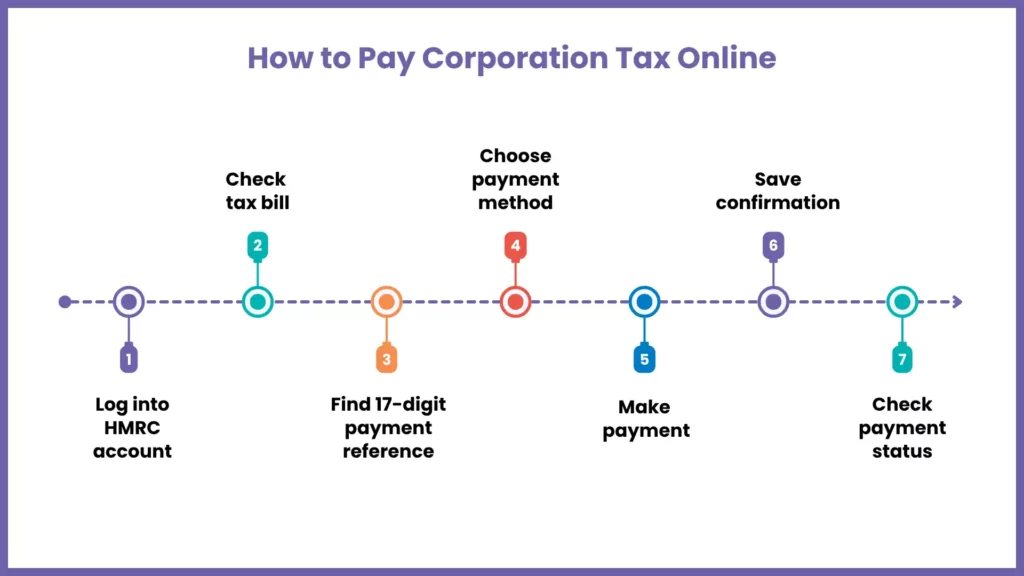
Paying Corporation Tax online is now the standard method used by most UK businesses. HMRC online payments are designed to make the process faster, more secure and easier to track. Before making payment, companies should ensure they have accurate tax calculations and the correct payment details ready.
Step 1: Log Into Your HMRC Corporation Tax Account
Access your HMRC Corporation Tax account using your Government Gateway login details. This account allows businesses to manage Corporation Tax, view balances and check payment history.
Step 2: Check Your Corporation Tax Bill
Review the amount due from your CT600 Company Tax Return calculations. Make sure the figures are accurate before making payment.
Step 3: Find Your Corporation Tax Payment Reference Number
You will need your unique 17-digit Corporation Tax payment reference number to ensure HMRC applies the payment correctly to your company account.
Step 4: Choose Your Payment Method
HMRC compatible payment methods include Faster Payments bank transfer, Direct Debit (if eligible), online banking services and CHAPS.
Step 5: Make the Payment
Complete the payment using your chosen method and carefully enter your payment reference number.
Step 6: Save Payment Confirmation
Keep proof of payment for your records. This can help if there are delays or future HMRC queries.
Step 7: Check Payment Status
Monitor your HMRC Corporation Tax account to confirm the payment has been received successfully.
Paying early gives businesses more time to fix problems and reduces the risk of missing the Corporation Tax payment deadline.
Information You Need Before Paying
Before you pay Corporation Tax online, make sure you have the correct information ready to avoid payment delays or mistakes.
Important Information You Need
- Corporation Tax payment reference number (17 digits)
- Company registration number
- HMRC Corporation Tax account login details
- Correct Corporation Tax amount due
- Business bank account details
- Accounting period dates
- CT600 Company Tax Return information
Checking these details before making payment helps ensure HMRC receives and applies the payment correctly.
Online Payment Methods Accepted by HMRC
HMRC offers several ways for businesses to pay Corporation Tax online. Each method has different processing times, so businesses should choose carefully based on the payment deadline.
Pay Corporation Tax by Bank Transfer (Faster Payments)
Businesses can make payments directly from their bank account to HMRC using Faster Payments. Faster Payments usually arrive on the same day or next working day.
Direct Debit Corporation Tax Payment
HMRC can collect payments directly from your business bank account after a Direct Debit is set up. Direct Debit is available for many companies, subject to HMRC eligibility and setup requirements.
Online Banking
Most businesses use online banking services through their bank’s website or mobile app to pay Corporation Tax online.
Corporate Debit Card (via Third-Party Payment Providers)
HMRC does not accept corporate credit or debit cards directly for Corporation Tax. Some third-party payment providers allow card payments but charge a fee.
CHAPS Payment
CHAPS payments are useful for same day large payments but banks may charge a fee for this service. CHAPS is a bank service for same-day high-value payments to HMRC.
Processing Times for Payment Methods
| Payment Method | Typical Processing Time |
| Faster Payments | Same day or next working day |
| Online Banking (Bacs) | Up to 3 working days |
| Direct Debit | Several working days to set up, then on agreed date |
| CHAPS | Same day (if initiated early enough) |
Choosing the right payment method helps businesses avoid delays and late payment charges.
Paying Corporation Tax by Direct Debit: What to Know
Paying Corporation Tax by Direct Debit is one of the easiest ways for businesses to manage tax payments with HMRC. Many companies prefer this method because it is secure, simple to set up and helps reduce the chance of missing payment deadlines. Businesses can arrange payments directly through their HMRC Business Tax Account using their business bank details.
What to Know Before Paying Corporation Tax by Direct Debit
Before setting up a Direct Debit Corporation Tax payment, it is important to check a few details to avoid payment problems or delays.
- Make sure you use the correct Corporation Tax payment reference number so HMRC can match the payment to your company account.
- Ensure there is enough money in your business bank account before the payment date to avoid failed payments and possible penalties.
- Set up the Direct Debit early because the first payment can take several working days to process.
- Check the Corporation Tax payment deadline carefully to make sure HMRC receives the payment on time.
- Decide whether you want to make a one-off payment or arrange regular scheduled payments for easier budgeting.
- Keep records of payment confirmations and bank transactions for future reference.
Using Direct Debit can make paying Corporation Tax easier for many businesses, especially when payments are planned in advance. If you are unsure about setting up payments or managing deadlines, professional support can help reduce mistakes and keep your business compliant with HMRC requirements.
How to Pay Corporation Tax If There’s No Tax Due
Even if your company does not owe Corporation Tax, you may still need to file information with HMRC. Many limited companies must still submit a CT600 Company Tax Return, annual accounts and keep proper business records. Filing correctly helps avoid penalties and keeps your company compliant with HMRC rules.
There are different reasons why no Corporation Tax may be due. Your company may have made no profit, traded at a loss, claimed tax reliefs or remained dormant during the accounting period. Even in these situations, businesses should still check their accounts carefully and confirm whether a tax return is required before the deadline.
Ignoring filing responsibilities because no tax is owed can still lead to penalties and HMRC checks. Many businesses use professional support to help prepare accounts, submit returns correctly and reduce the risk of mistakes.
How to Check If HMRC Received Your Corporation Tax Payment
After making a payment, businesses should confirm that HMRC has received the funds correctly. This helps avoid future payment disputes and late payment notices.
Step 1: Log Into Your HMRC Corporation Tax Account
Your online account will normally show recent payment activity and outstanding balances.
Step 2: Check Your Corporation Tax Balance
If the payment has been processed correctly, your outstanding balance should reduce or show zero.
Step 3: Review Payment Confirmation
Check the bank payment reference and transaction details carefully.
Step 4: Allow Processing Time
Some payment methods take longer than others, especially at weekends and bank holidays.
Step 5: Contact HMRC If Needed
If payments do not appear after several days, contact HMRC with your payment reference details.
Checking payments regularly helps businesses identify issues early and avoid unnecessary penalties.
Common Mistakes When Paying Corporation Tax Online (And How to Avoid Them)
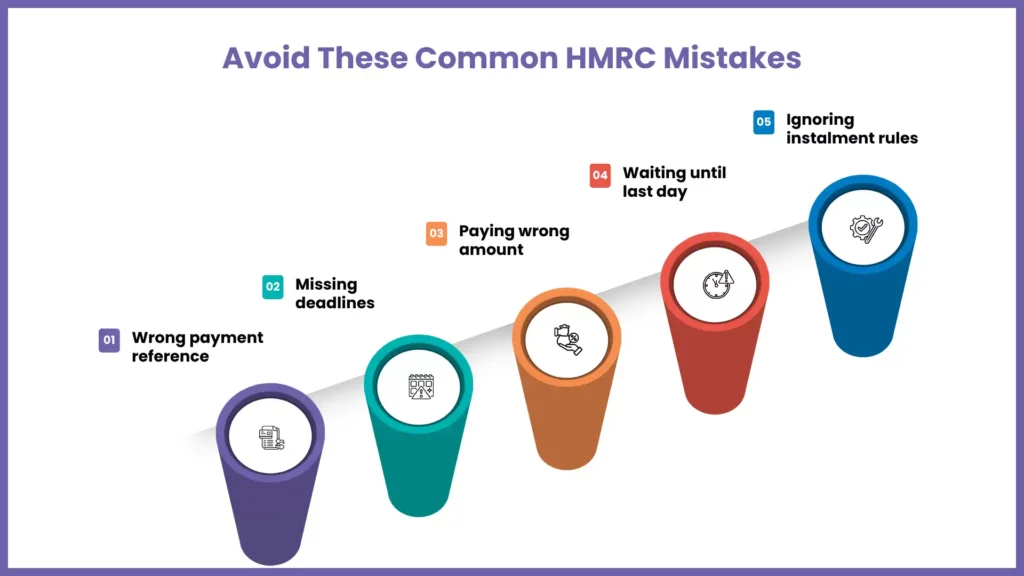
Many businesses make simple mistakes when trying to pay Corporation Tax online. These errors can lead to delays, penalties or payments being applied incorrectly.
Using the Wrong Payment Reference
Always use the correct Corporation Tax payment reference number when paying HMRC.
Missing the Payment Deadline
Set reminders early to avoid missing the Corporation Tax payment deadline.
Paying the Wrong Amount
Check calculations carefully before making a payment.
Waiting Until the Last Day
Bank processing delays can cause late payments even if money leaves your account on time. Always pay at least 1–3 working days before the deadline, depending on the payment method.
Forgetting Quarterly Instalment Rules
Large companies should check whether quarterly instalment payments for Corporation Tax apply.
Careful preparation and early payment can help businesses avoid most HMRC payment problems.
What Happens If You Can’t Pay Corporation Tax on Time?
If a business cannot pay Corporation Tax on time, it should contact HMRC immediately instead of ignoring the problem. HMRC may allow businesses to arrange a Time to Pay arrangement depending on the company’s circumstances.
Late payments can lead to:
- Interest charges
- Penalties
- HMRC debt collection action
- Increased financial pressure
A Time to Pay arrangement may allow businesses to spread payments over time if approved by HMRC.
Do You Need an Accountant to Pay Corporation Tax Online?
Yes, many businesses benefit from using an accountant for Corporation Tax support. Although some business owners choose to manage payments themselves, Corporation Tax rules can become complicated, especially when dealing with allowances, losses, instalment payments and filing deadlines.
An accountant can help ensure your Corporation Tax calculations are correct, payments are made on time and your CT600 Company Tax Return is filed accurately. This reduces the risk of HMRC penalties and can also help identify tax saving opportunities.
Advantages of Having an Accountant
- Accountants help ensure your Corporation Tax figures are correct.
- They help businesses avoid late filing and payment penalties.
- Professional advice may help reduce future tax liabilities legally.
- Accountants can deal with HMRC queries and filing requirements.
- Professional support often improves overall business financial management.
For many small businesses, working with an accountant saves time, reduces stress and improves confidence when managing tax obligations.

Need Expert Help with Corporation Tax Payments?
MyIVA helps UK businesses manage Corporation Tax payments, CT600 filings, HMRC deadlines and compliance with confidence. Speak to our experts today for reliable, stress-free support tailored to your business needs.
FAQs: Frequently Asked Questions
Can I Pay Corporation Tax Online Without an Accountant?
Yes, businesses can pay Corporation Tax online themselves using HMRC-compatible payment methods. However, professional support may help avoid errors.
What Is a Corporation Tax Payment Reference Number?
It is a unique 17-digit number used by HMRC to match payments to your company account. Using the wrong reference may delay payment allocation.
Can I Pay Corporation Tax Early?
Yes, businesses can make payments early if they wish. Some companies do this to help manage budgeting.
How Long Does HMRC Take to Process Payments?
Processing time depends on the payment method used. Faster Payments are usually same day, while some methods take several working days.
Can Dormant Companies Ignore Corporation Tax?
No. Dormant companies may still need to inform HMRC and meet certain filing obligations.
Conclusion
Understanding how to pay Corporation Tax online is an important part of managing a limited company in the UK. From knowing your deadlines and payment methods to checking HMRC received your payment correctly, every step helps keep your business compliant and avoid unnecessary penalties.
For many small businesses, Corporation Tax rules and payment processes can feel confusing and time-consuming. Getting support from experienced professionals can make things easier, reduce mistakes and help ensure your company meets all HMRC requirements properly.
Need help managing your Corporation Tax payments and filings?
Speak with MyIVA today for reliable support tailored to your business needs.