A dormant company does not usually need to file a Company Tax Return once HMRC has confirmed dormant status in writing. Until that confirmation arrives, the filing obligation stays in place, and if HMRC later issues a notice to deliver a return, that notice must still be answered regardless of trading activity.
This guide sets out the current 2026 HMRC and Companies House rules for dormant companies in the UK, including the difference between a dormant company and a non trading company, what still has to be filed even once dormancy is confirmed, and what happens if a notice arrives unexpectedly.
What Does “Dormant Company” Actually Mean?
To understand if your company needs to report to HMRC and Companies House, start with the HMRC dormant company definition. A company is generally considered dormant if it has had no significant accounting transactions during a specific accounting period. A significant transaction is broadly anything that must be entered into the company’s accounting records, such as bank interest, expenses, or trading income.
Examples of transactions that do not count as significant, and so do not break dormant status, include payment for shares taken by the initial subscribers to the memorandum of association, and the annual confirmation statement fee paid to Companies House. Anything beyond these, including a single bank charge or a small amount of interest, can end dormant status.
However, there is a distinct difference between being dormant and a non-trading company. A non-trading company may still have business activities or transactions that don’t constitute “trading” in a traditional sense, but they might not meet the strict HMRC dormant company definition. For instance, a holding company’s dormant status usually implies it only holds assets without any active management or movement of funds.
If you are asking “what is a dormant company”, the answer depends on which body you are asking. Companies House considers a company dormant if it has had no significant accounting transactions in the financial year. HMRC views a dormant company for tax purposes as one that has stopped trading and has no other income, such as investment interest.
Do Dormant Companies Need to File a Company Tax Return (CT600)?
The short answer is not usually, provided HMRC has officially confirmed the business as dormant. Once you have informed HMRC of your status, they will typically stop sending a notice to deliver a company tax return.
However, until that formal acknowledgement is received, the requirement remains. Many directors mistakenly assume that because they are not trading, they can ignore the dormant company CT600 requirements. This is a dangerous assumption that can lead to significant penalties. Even if you believe your entity is a dormant company for tax purposes, you must ensure that HMRC has agreed to this status in writing.
Do dormant companies pay corporation tax? If the company is truly dormant and has no income, then no. But if even a small amount of interest is earned on a dormant company bank account, HMRC may decide the company is no longer dormant, and a Company Tax Return will be required for that period.
What If HMRC Sends a Notice to File a Tax Return Anyway?
If you receive a notice to deliver a company tax return, it cannot be ignored on the assumption the business is inactive. Even for a dormant company, the notice is a legal demand. If HMRC sends this notice, it means their records still show the company as active, or they have not yet processed the dormancy notification.
In this scenario, you must still complete the dormant company CT600 or contact HMRC to explain why the return is not due. Failing to respond results in automatic late filing penalties, which escalate quickly under the 2026 rates (see the penalty table below). So the answer becomes a clear “yes” once a formal notice has been issued.
How to Notify HMRC That Your Company Is Dormant
To avoid the constant headache of a company tax return dormant company, you must proactively notify HMRC. You can do this through your online account or by letter, stating that the business is now a dormant company for tax purposes. You should include the date trading ceased or the date the company was incorporated if it has never traded.
Once notified, HMRC will update their records accordingly. This exempts you from filing a Company Tax Return for as long as HMRC continues to treat the company as dormant, which is not on a fixed timer. HMRC can request a return at any point if their records suggest activity, so it is worth reconfirming dormant status if several years pass without contact.
If you are dissolving a dormant company instead, the process differs. A final set of accounts and a final Company Tax Return must be filed before the company is struck off.
What Dormant Companies Still Must File
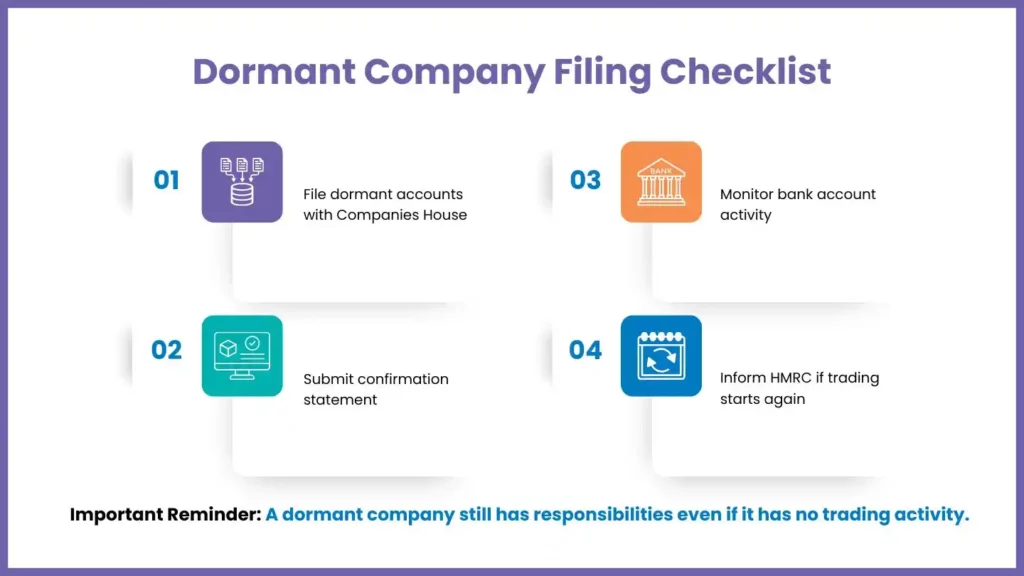
While you might be exempt from the dormant company corporation tax return, dormancy does not mean you have zero responsibilities. You must still interact with Companies House. Every year, you are required to file “dormant accounts” and a “confirmation statement”. These are much simpler than full trading accounts but are still mandatory.
Furthermore, if your company was previously VAT registered, you will usually need to deregister for VAT, since remaining VAT registered while filing VAT returns is generally inconsistent with dormant status. Additionally, managing a dormant company bank account requires care; any bank charges or interest earned could inadvertently end your dormant status.
Worked Example: A Dormant Company Timeline
Let’s look at a typical 2026 timeline for a new business to see when the question “Does a Dormant Company Need to File Tax Return?” arises:
- January 2026: Incorporation of the company.
- February 2026: The company is registered with HMRC for Corporation Tax.
- March 2026: The directors decide not to trade yet. They notify HMRC that it is a dormant company for tax purposes.
- December 2026: The company’s first year-end. No notice to deliver a company tax return is received because HMRC has marked it as dormant,.
- January 2027: The directors file dormant accounts and a confirmation statement with Companies House to maintain the dormant company meaning UK status.
In this example, the directors avoided the dormant company CT600 by being proactive.
Can I Make My Company Dormant Just to Avoid Filing a Tax Return?
Some directors ask whether they can simply stop working to skip the paperwork. A company cannot be declared dormant to avoid tax obligations if it is actually active. If the company has any income, it is not dormant for tax purposes.
Attempting to fit an active business into the HMRC dormant company definition is considered tax evasion. HMRC has sophisticated tools in 2026 to track bank movements and third-party data to ensure that a company’s dormant company tax return status is legitimate. If you are caught misrepresenting your status, the penalties are far worse than the cost of filing a dormant company corporation tax return.
What Happens If You Miss a Dormant Filing?
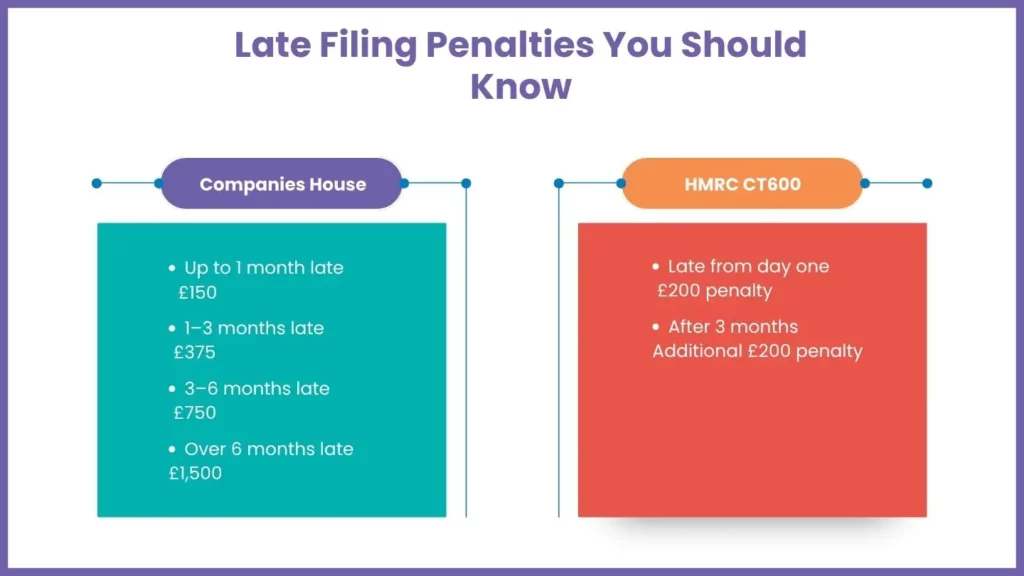
Missing a deadline for a dormant company CT600 when one was requested, or missing a Companies House dormant accounts deadline, leads to automatic fines. The table below sets out the current 2026 rates.
| Filing | Body | Penalty |
|---|---|---|
| Accounts up to 1 month late | Companies House | £150 |
| Accounts 1 to 3 months late | Companies House | £375 |
| Accounts 3 to 6 months late | Companies House | £750 |
| Accounts more than 6 months late | Companies House | £1,500 |
| CT600 late on day one | HMRC | £200 |
| CT600 still late after 3 months | HMRC | Further £200 |
Companies House penalties double if accounts are filed late in two consecutive financial years. HMRC also adds a tax geared penalty of 10% of any unpaid corporation tax once a return is six months overdue, and a further 10% at twelve months, on top of the fixed penalties above.
Even if a dormant company is being dissolved, these filings must be kept up until the company is officially removed from the register. Assuming no filing is needed because the company “doesn’t do anything” is a common and costly mistake.
Restarting Trading: What Happens Next?
If a dormant company starts trading again, HMRC must be notified within three months. From that point, a full Company Tax Return is required for the relevant accounting period.
You will need to prepare full statutory accounts and the dormant company CT600 will be replaced by a standard Corporation Tax return. You must also check if you need to register for VAT again if you previously went through VAT deregistration for a dormant company.
Typical Situations Where Dormancy Applies
Understanding the dormant company meaning UK is easier when looking at common scenarios:
- The “Idea” Phase: You incorporated a name to protect it but haven’t started trading yet (a shelf company vs dormant company).
- Owner Absence: An owner is ill or taking a sabbatical and ceases all business activity.
- Property Management: A holding company dormant status for an entity that owns a freehold but has no service charges or income.
In these cases, knowing what a dormant company is allows you to minimize administrative burdens legally.
FAQs: Frequently Asked Questions
How long can a company stay dormant?
Indefinitely, as long as you continue to file your annual confirmation statement and dormant accounts with Companies House and HMRC remains satisfied with your dormant company for tax purposes status.
Does a dormant company need a UTR?
Yes. Even a dormant company, meaning a UK entity, will be issued a Unique Taxpayer Reference (UTR) upon incorporation. You need this to notify HMRC of your dormancy.
Does a dormant company need a bank account?
It doesn’t need one, and often having a dormant company bank account is a liability because bank fees or interest can void your dormancy.
How do you report a company as dormant to HMRC?
You must contact them directly via their online services or by post once you meet the HMRC dormant company definition.
Do dormant companies pay Corporation Tax?
No. By definition, a dormant company for tax purposes has no taxable profits.
Conclusion: How MyIVA Can Help
Understanding these rules is essential for any director who wants to avoid HMRC penalties. Whether managing a holding company or dissolving one, the paperwork must be precise.
MyIVA specialises in helping business owners navigate these complex 2026 rules. We can assist you in:
- Determining if you meet the strict HMRC dormant company definition.
- Managing the VAT deregistration dormant company process.
- Ensuring your dormant company CT600 requirements are met if HMRC issues a notice.
- Filing your dormant accounts and confirmation statements to protect your dormant company’s UK status.
Don’t let an inactive company become an active financial burden. Let MyIVA handle the compliance so you can focus on your next big venture.