More than 5.5 million small businesses are currently active in the UK. Many of these are limited companies that need to deal with Corporation Tax each year. HMRC data shows that late registration and filing errors are common reasons small businesses face penalties and unwanted attention from tax authorities.
For many owners, registering for Corporation Tax can seem confusing at first. New rules, online systems, and strict deadlines can make it difficult to know where to begin. Small business owners often concentrate on sales and growth. Later, they realise that tax registration should have been handled much earlier.
Registering for Corporation Tax means confirming to HMRC that your company is active and liable to pay tax on profits. For most new companies, HMRC opens this record automatically when you incorporate with Companies House, what you’re actually responsible for is telling HMRC once you start trading, and that must happen within three months.
This guide explains how to register for Corporation Tax in 2026, when registration is required, and how small businesses can avoid costly mistakes.
What is Corporation Tax?
Corporation Tax is the tax that limited companies and certain other organisations pay on their profits. These profits can come from trading activity, investments, or selling company assets. When you register for Corporation Tax, you inform HMRC that your small business is part of this system.
Corporation Tax is important for how a small firm handles its finances. Once registered, the company must keep accurate records, file Corporation Tax returns, and pay any tax owed by the deadline. Mistakes or delays during registration can lead to penalties, interest charges, or inquiries from HMRC.
If a small business does not register or ignore its responsibilities, HMRC can issue estimated tax bills based on limited information. These estimates are often higher than the actual amount owed. Understanding Corporation Tax early helps small firms manage their cash flow and avoid issues later.
How Registration Actually Works: Automatic vs. Manual
When you incorporate a limited company through Companies House, HMRC is notified automatically and opens a Corporation Tax record for your company in the background. Within 14 days of incorporation, HMRC posts a letter to your registered office titled “Information for new companies,” confirming your company’s 10-digit Unique Taxpayer Reference (UTR) and, in many cases, a form called CT41G. Keep this letter safe; you’ll need the UTR to complete tax returns and to communicate with HMRC.
Having a UTR does not mean you’ve finished registering. You still need to notify HMRC once your company starts trading, and that’s the three-month deadline covered below. If you never received your “Information for new companies” letter, you can request your UTR online through your business tax account.
What’s Changed for 2026
The main and small profits Corporation Tax rates are unchanged for 2026 (25% over £250,000 profit, 19% up to £50,000, with marginal relief between the two). A handful of allowance and investment scheme changes from the Autumn Budget 2025 do affect capital allowances and share schemes, our full breakdown of 2026 Corporation Tax rates and allowances covers these in detail.
When Do You Need to Register for Corporation Tax?
Registering on time is one of the most important tax duties for a small business. HMRC expects companies to register for Corporation Tax soon after they become active, not when profits appear. Missing this step can cause delays, penalties, and filing problems later.
After Incorporating a Limited Company
Once a small business incorporates as a limited company, HMRC automatically opens a Corporation Tax record, but this is not the same as being registered as active. You must still tell HMRC once the company starts business activity.
When Your Company Starts Trading
A small firm is considered trading when it begins buying, selling, advertising, or offering services. From this point, the clock starts. Most companies must register for Corporation Tax within three months of this date.
If Your Company Has Taxable Income or Profits
Even if profits are low, taxable income still brings about Corporation Tax obligations. Registering makes sure HMRC records are accurate and prevents assumptions about undeclared income.
When Employing Staff or Paying Directors
If a small business pays directors or hires staff, it signals active trading. This is another clear point when you must register for Corporation Tax and align PAYE records.
If Your Company Owns or Rents Property
Rental income or property ownership can create taxable profits. Many small firms forget these count as trading activity for Corporation Tax purposes.
For Dormant Companies That Become Active
A dormant company that starts trading must notify HMRC. Once active, it must register for Corporation Tax without delay.
If You Are a Non-UK Company Trading in the UK
Overseas companies with UK trading activity may also need to register for Corporation Tax. This depends on the nature of operations and presence in the UK.
Registering early gives clarity, prevents backdated issues, and keeps your small business compliant from day one.
Step-by-Step Guide: How to Register for Corporation Tax Online in 2026
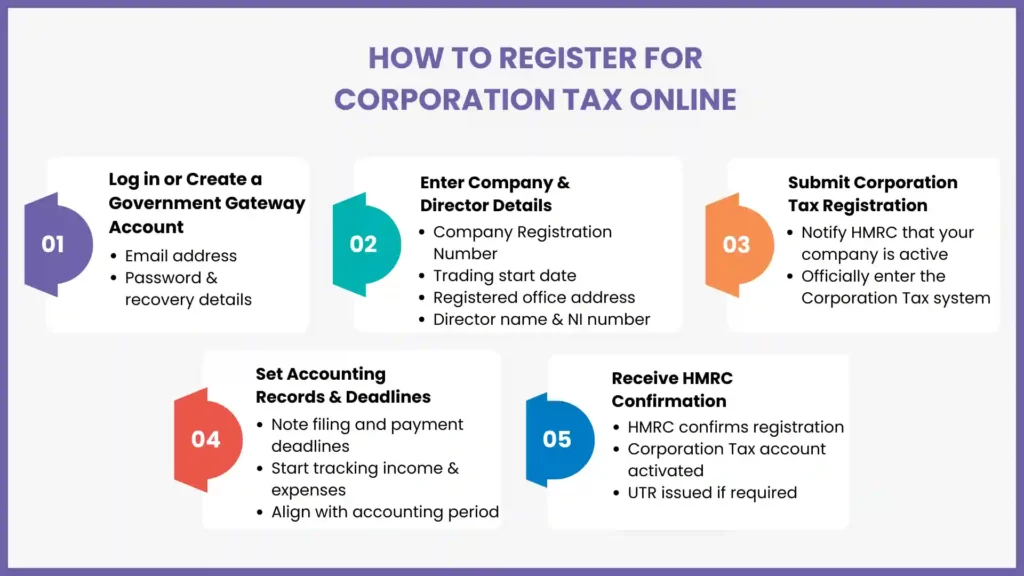
Registering online remains the fastest and simplest option for small businesses. The process is straightforward if details are prepared in advance.
Create or Sign in to Your Government Gateway Account
You will need a Government Gateway account to access HMRC services. Most small firms already have one from incorporation or PAYE setup.
Gather Your Company and Director Details
Have your Company Registration Number, trading start date, registered address, and director information ready. Accurate data speeds up approval.
Register for Corporation Tax with HMRC Online
Log in and complete the Corporation Tax registration form. This officially tells HMRC that your small business is active and liable for tax.
Set Up Corporation Tax Deadlines and Records
Once registered, note filing and payment deadlines. Set up basic accounting records to track income and expenses.
Receive Confirmation and Prepare for Filing
HMRC will confirm registration within a few days. If you haven’t already received your UTR and CT41G letter (usually posted within 14 days of incorporation), you can request it through your business tax account.
Completing these steps on time keeps your small business organised and penalty-free.
Documents Required for Corporation Tax Registration
Having the right documents ready makes it easier to register for Corporation Tax without delays. HMRC checks these details to confirm your company’s identity and activity.
1. Company Registration Number
Confirms your company is registered with Companies House.
2. Certificate of Incorporation
Shows the legal formation date of the company.
3. Company Unique Taxpayer Reference
Used by HMRC to track Corporation Tax records, sent to you in your CT41G letter within 14 days of incorporation.
4. Registered Office Address
Ensures official correspondence reaches the correct location.
5. Details of Business Activities
SIC codes explain what your small business does.
6. Accounting Period Details
Defines the period covered by your Corporation Tax return.
7. Trading Start Date
Determines deadlines for registration and filing.
8. Director’s Full Name and Personal Details
Identifies those responsible for tax compliance.
9. Director’s National Insurance Number
Links personal and company tax records.
10. Shareholder Details
Required for ownership and profit allocation checks.
11. Company Contact Details
Allows HMRC to communicate efficiently.
12. PAYE Reference
Needed if the company employs staff or pays directors.
13. Government Gateway Login Details
Grants access to HMRC online services.
14. Details of Associated Companies
Used to assess profit thresholds and reliefs.
Preparing these documents early helps small firms register for Corporation Tax smoothly and avoid repeated requests from HMRC.
What Happens After You Register for Corporation Tax?
After registration, HMRC sets up your Corporation Tax account. You will receive confirmation and any reference numbers needed for future filings. From this point, your small business is officially on HMRC’s Corporation Tax system.
You must then keep accurate financial records. This includes income, expenses, payroll, and asset purchases. These records support your Corporation Tax return and protect your small firm during checks.
Each year, you must file a Corporation Tax return and pay any tax due within the deadline. Even if no tax is owed, filing is still required once registered.
Common Mistakes to Avoid When Registering for Corporation Tax
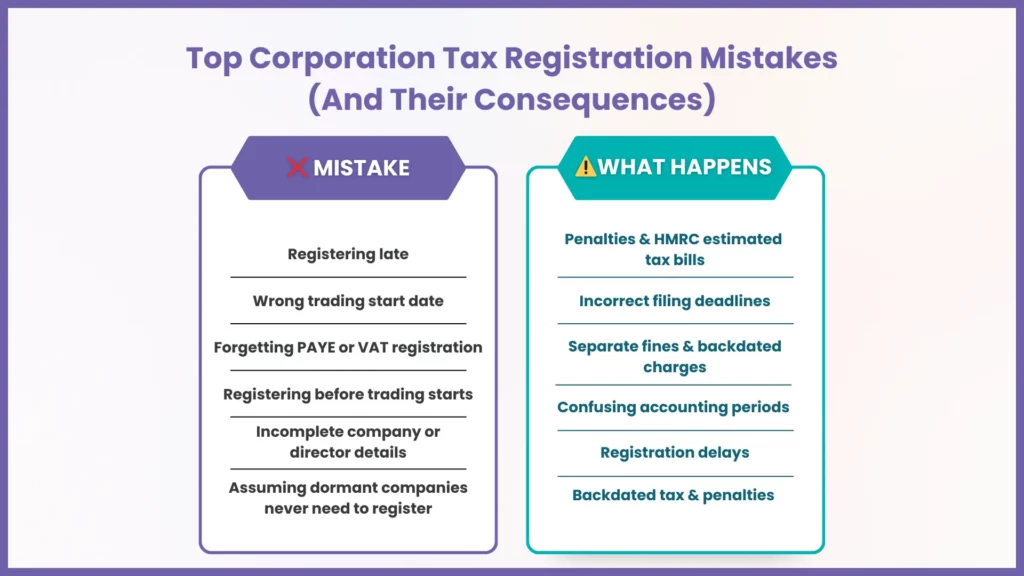
Many small businesses make avoidable errors when they first Register for Corporation Tax. These mistakes often happen due to lack of guidance or misunderstood HMRC rules.
Missing the Corporation Tax Registration Deadline
Failing to register within three months of trading can lead to penalties and HMRC follow ups.
Registering Before the Company Starts Trading
Registering too early can create confusion around accounting periods and filings.
Entering Incorrect Trading or Accounting Dates
Wrong dates can trigger incorrect deadlines and late filing notices.
Providing Incomplete Director or Company Details
Missing information slows processing and can cause rejection of registration.
Forgetting to Register for PAYE or VAT Separately
Corporation Tax registration does not cover PAYE or VAT. These require separate actions.
Assuming Dormant Companies Do Not Need Registration
Once a dormant company becomes active, registration is required immediately.
Avoiding these errors saves time, money, and stress for small firms.
What If You Miss the 3-Month Deadline for Registration?
If a small business misses the three-month deadline, HMRC may still allow registration, but penalties can apply. The longer the delay, the higher the risk of fines and interest charges.
Late registration often leads HMRC to estimate profits and issue tax demands. These estimates may not accurately reflect the company’s actual situation, leading to disputes and extra work.
Acting quickly minimises the damage. Register as soon as possible, correct records, and seek professional help if penalties are issued. Taking action early shows cooperation and can help limit costs.

Corporation Tax Registration & Support for £199
Get your limited company registered correctly with HMRC and stay fully compliant without stress. MyIVA’s Corporation Tax service is just £199, with expert support from start to finish.
Frequently Asked Questions
Does incorporating my company automatically register it for Corporation Tax?
Partly. HMRC automatically opens a Corporation Tax record when you incorporate with Companies House and posts your UTR within 14 days. You still need to actively tell HMRC once your company starts trading, within three months of that date.
Do I need to register for Corporation Tax if my company is dormant?
No, dormant companies do not need to register. Once the company becomes active, you must register for Corporation Tax promptly.
Can I register for Corporation Tax before I start trading?
You should wait until trading begins. Registering too early can cause issues with accounting periods.
How long does it take to get a Corporation Tax reference number?
HMRC posts your Unique Taxpayer Reference within 14 days of incorporation, inside a letter titled “Information for new companies.” If it doesn’t arrive, you can request it through your business tax account.
How do I change my accounting period after registration?
You can update this through your HMRC account or by contacting HMRC directly.
What happens if I stop trading? Do I still need to file a Corporation Tax return?
Yes, you must file until HMRC confirms the company is dormant or closed.
What is a CT41G form?
CT41G is the form HMRC sends to newly incorporated companies to confirm their Unique Taxpayer Reference and Corporation Tax details. It usually arrives as part of the “Information for new companies” letter within 14 days of incorporation.
Conclusion
Registering for Corporation Tax is a key responsibility for every small business operating as a limited company. Doing it on time sets the foundation for accurate filings, proper planning, and peace of mind.
Whether HMRC has already opened your Corporation Tax record automatically or you’re registering manually after starting to trade, getting the timing and details right from the outset avoids penalties later.
MyIVA supports small businesses, sole traders, and individuals by handling Corporation Tax registration, filings, and ongoing compliance. If you want to register for Corporation Tax without stress and get expert support at every stage, speak to MyIVA today and let professionals take care of the numbers while you focus on growth.