

Over 12 million people in the UK file Self Assessment tax returns each year, and late submissions cost taxpayers more than £140 million in penalties last year alone. Small businesses and sole traders often juggle these UK tax deadlines with daily operations, making it easy to slip up. At MyIVA, we see firsthand how one missed date can lead to stress and extra costs.
UK tax deadlines shape your financial year, from Self Assessment filings to VAT payments. Get them wrong, and HMRC penalties kick in fast. This guide breaks down every key date for 2025/2026 so you stay on top.
In this blog, we’ll take a detailed look at the UK tax deadlines in detail. You will find tables, monthly breakdowns, and tips tailored for sole traders, small businesses, and limited companies. MyIVA helps track these dates to keep your finances smooth.
Understanding the UK Tax Year
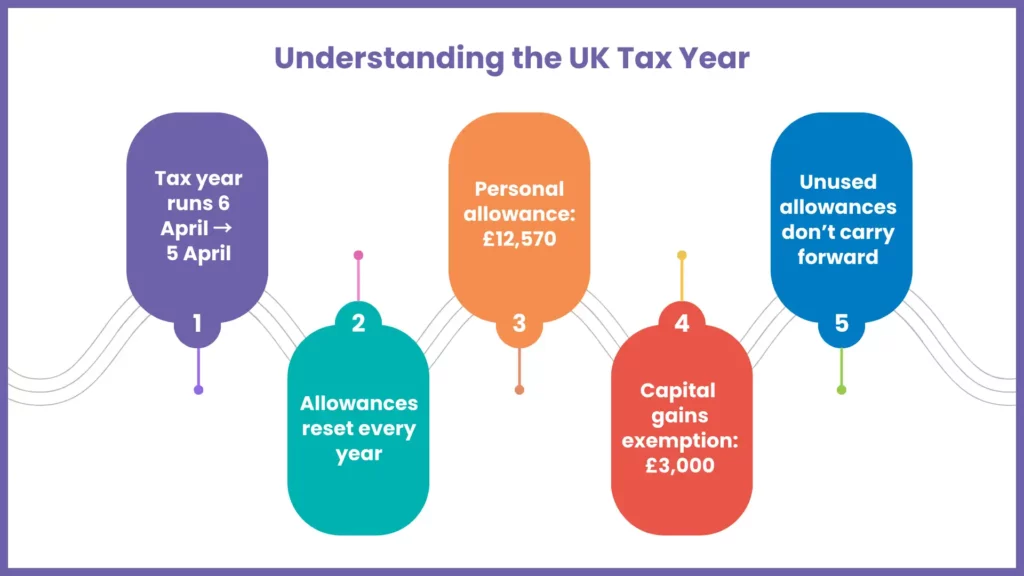
The UK tax year runs from 6 April to 5 April the following year. For example, the 2025/2026 tax year starts from 6 April 2025 and will end on 5 April 2026. If you’re filing for 2024/2025, that year wrapped up on 5 April 2025, and certain deadlines for it are still live right now.
This dates because your tax-free allowances reset with each new tax year. The personal allowance sits at £12,570, and the capital gains exemption at £3,000. Once the year closes, any unused allowance is lost.
For sole traders and small businesses, the tax year ties directly to when profits are assessed. For limited companies, corporation tax usually follows your accounting year-end instead. VAT runs on its own quarterly cycle. And if your tax bill exceeds £1,000, you’ll likely be making payments on account, splitting what you owe across two advance instalments. Getting your Unique Taxpayer Reference (UTR) sorted early is the starting point for all of it.
Key UK Tax Deadlines for 2025/2026
UK tax deadlines for 2025/2026 cover Self Assessment, corporation tax, VAT, and more. Small businesses face these alongside daily tasks. Note them to dodge £100+ fines.
| Date | Deadline | Description |
| 31st October 2025 | Paper Self Assessment | Last day for paper returns for 2024/25 tax year. Online due later. |
| 31st January 2026 | Online Self Assessment | File online and pay balancing payment for 2024/25, plus first payment on account. |
| 5th April 2026 | Tax Year End | End of 2025/26; use up allowances like pensions. |
| 31st July 2026 | Second Payment on Account | Pay if prior tax over £1,000 for 2024/25. |
| 1st January 2027 | Corporation Tax Example | For year-ends 31st March 2026. |
Below are the deadlines for each category:
Self Assessment Tax Return Deadlines
Self Assessment hits sole traders and landlords hardest among UK tax deadlines. File for 2024/25 now, with 2025/26 next year. Paper forms must go in early.
| Date | Deadline | Description |
| 5th October 2025 | Register for 2024/25 | Tell HMRC if newly self-employed. |
| 31st October 2025 | Paper Return | For 2024/25 tax year. |
| 31st January 2026 | Online Return | File and pay for 2024/25. |
| 31st July 2026 | Second Payment | On account for 2024/25. |
| 5th October 2026 | Register for 2025/26 | New filers only. |
Keep records digital from April 2026 under Making Tax Digital. MyIVA sends reminders for these UK tax deadlines.
Corporation Tax Deadline for Limited Companies
Limited companies pay corporation tax nine months after year-end. Returns due 12 months later. Align with Companies House filings.
| Date | Deadline | Description |
| 1st January 2026 | Payment for 31/03/26 Year-End | Nine months from March year-end. |
| 31st December 2026 | Return for 31/12/25 Year- End | File CT600 form. |
| 1st April 2026 | Payment for 30/06/25 Year-End | Quarterly payers adjust here. |
| 1st October 2026 | Payment for 30/12/25 Year-End | Standard nine-month rule. |
Late payments add 4% interest. Check your accounting period ends.
VAT Return & Payment Deadlines for 2025/2026
VAT schemes run quarterly or monthly. Payments due one month and seven days after period end. Staggered schedules apply.
| Date | Deadline | Description |
| 7th May 2025 | VAT for March 2025 | Quarterly period end 31st March. |
| 7th August 2025 | VAT for June 2025 | Next quarter. |
| 7th November 2025 | VAT for Sept 2025 | Standard quarterly |
| 19/22 Monthly | Ongoing VAT/PAYE | Electronic by 19th, post by 22nd. |
Annual VAT adjustments may apply. MyIVA integrates these UK tax deadlines.
PAYE (Pay as You Earn) Deadlines for Employers
Employers deduct PAYE and National Insurance monthly. Real Time Information (RTI) submits with payments.
| Date | Deadline | Description |
| 19th Monthly | Electronic PAYE/National Insurance | For prior month. |
| 22nd Monthly | Postal PAYE | Cheque payments. |
| 2nd November 2025 | P46 Car Forms Q3 | Quarter end Oct 2025. |
| 19th Feb 2026 | Jan 2026 PAYE | Monthly cycle. |
Even small teams with one employee must comply.
Business-Specific Tax Deadlines for 2025/2026
Small businesses, sole traders, and partnerships face tailored UK tax deadlines. Staying compliant with HMRC builds trust and avoids audits. Cash flow planning around these dates keeps operations smooth.
Sole Traders and Self-Employed Tax Deadlines
Sole traders blend income tax with National Insurance. UK tax deadlines mirror Self Assessment.
| Date | Deadline | Description |
| 31st January 2026 | File and Pay | 2024/25 year. |
| 31st July 2026 | Payment on Account | Half of expected tax. |
| 5th April 2026 | Maximise Allowances | Trading allowance £1,000. |
Limited Liability Partnerships (LLPs) Deadlines
LLPs file like partnerships but partners handle Self Assessment. Corporation tax if trading.
| Date | Deadline | Description |
| 31st January 2026 | Partner Self Assessment | Individual returns. |
| Nine Months Year-End | LLP Corporation Tax | If applicable. |
| 31st July 2026 | Payments on Account | Per partner. |
Ltd Companies Tax Deadlines
For limited companies, Corporation Tax is a key responsibility, and they also need to submit their accounts and filings to Companies House through WebFiling.
| Date | Deadline | Description |
| Nine Months Year-End | Corporation Tax Payment | E.g., 1st Jan for March Year-End. |
| 12 Months Year-End | CT600 Return | Online only. |
| Nine Months Year-End | Companies House Accounts | Full or micro-entity. |
Monthly Breakdown of UK Tax Deadlines (2025-2026)
Paying taxes on time and accurately requires understanding the specific deadlines that fall throughout 2026, helping you avoid penalties and manage cash flow effectively across the entire year.
January 2026
| Date | Deadline | What It Means |
| 7th Jan | VAT Return (if due) | Submit and pay VAT for quarter ending 31st Dec 2025 (check your schedule). |
| 19th Jan | PAYE and National Insurance | Electronic payment for December 2025 payroll deductions. |
| 22nd Jan | PAYE Postal Payment | Post/cheque option for December payroll. |
| 31st Jan | Self Assessment | Online filing + balancing payment + first payment on account for 2024/25 tax year. |
February 2026
| Date | Deadline | What It Means |
| 7th Feb | VAT Return (if due) | VAT for quarter ending 31st Jan 2026. |
| 19th Feb | PAYE and National Insurance | Electronic payment for January 2026 payroll. |
| 22nd Feb | PAYE Postal Payment | Post/cheque for January payroll. |
| 20th Feb | CIS Monthly Return | Construction Industry Scheme deductions for January (if applicable). |
March 2026
| Date | Deadline | What It Means |
| 7th Mar | VAT Return (if due) | VAT for quarter ending 28th Feb 2026. |
| 19th Mar | PAYE and National Insurance | Electronic payment for February payroll. |
| 22nd Mar | PAYE Postal Payment | Post/cheque for February payroll. |
April 2026
| Date | Deadline | What It Means |
| 5th Apr | Tax Year End | End of 2025/26 tax year; use up allowances/pensions. |
| 6th Apr | New Tax Year Start | 2026/27 tax year begins; reset thresholds. |
| 7th Apr | VAT Return (if due) | VAT for quarter ending 31st Mar 2026. |
| 19th Apr | PAYE and National Insurance | Electronic payment for March payroll. |
| 22nd Apr | PAYE Postal Payment | Post/cheque for March payroll. |
May 2026
| Date | Deadline | What It Means |
| 7th May | VAT Return (if due) | VAT for quarter ending 30th Apr 2026. |
| 19th May | PAYE and National Insurance | Electronic payment for April payroll. |
| 22nd May | PAYE Postal Payment | Post/cheque for April payroll. |
| 31st May | Issue P60 Forms | Give employees annual earnings summary for 2025/26. |
June 2026
| Date | Deadline | What It Means |
| 7th Jun | VAT Return (if due) | VAT for quarter ending 31st May 2026. |
| 19th Jun | PAYE and National Insurance | Electronic payment for May payroll. |
| 22nd Jun | PAYE Postal Payment | Post/cheque for May payroll. |
| 20th Jun | CIS Monthly Return | Construction deductions for May (if applicable). |
July 2026
| Date | Deadline | What It Means |
| 7th Jul | VAT Return (if due) | VAT for quarter ending 30th Jun 2026. |
| 19th Jul | PAYE and National Insurance | Electronic payment for June payroll. |
| 22nd Jul | PAYE Postal Payment | Post/cheque for June payroll. |
| 31st Jul | Second Payment on Account | Self-employed pay advance for 2024/25 if tax > £1,000. |
August 2026
| Date | Deadline | What It Means |
| 7th Aug | VAT Return (if due) | VAT for quarter ending 31st Jul 2026. |
| 19th Aug | PAYE and National Insurance | Electronic payment for July payroll. |
| 22nd Aug | PAYE Postal Payment | Post/cheque for July payroll. |
September 2026
| Date | Deadline | What It Means |
| 7th Sep | VAT Return (if due) | VAT for quarter ending 31st Aug 2026. |
| 19th Sep | PAYE and National Insurance | Electronic payment for August payroll. |
| 22nd Sep | PAYE Postal Payment | Post/cheque for August payroll. |
| 20th Sep | CIS Monthly Return | Construction deductions for August. |
October 2026
| Date | Deadline | What It Means |
| 5th Oct | Self Assessment Register | Notify HMRC for 2025/26 if newly liable. |
| 7th Oct | VAT Return (if due) | VAT for quarter ending 30th Sep 2026. |
| 19th Oct | PAYE and National Insurance | Electronic payment for September payroll. |
| 22nd Oct | PAYE Postal Payment | Post/cheque for September payroll. |
| 31st Oct | Paper Self Assessment | Paper returns due for 2025/26 tax year. |
November 2026
| Date | Deadline | What It Means |
| 7th Nov | VAT Return (if due) | VAT for quarter ending 31st Oct 2026. |
| 19th Nov | PAYE and National Insurance | Electronic payment for October payroll. |
| 22nd Nov | PAYE Postal Payment | Post/cheque for October payroll. |
December 2026
| Date | Deadline | What It Means |
| 7th Dec | VAT Return (if due) | VAT for quarter ending 30th Nov 2026. |
| 19th Dec | PAYE and National Insurance | Electronic payment for November payroll. |
| 22nd Dec | PAYE Postal Payment | Post/cheque for November payroll. |
| Varies | Corporation Tax | Due 9 months after company year-ends (e.g., 1st Oct for 30th Dec 2025). |
Understanding Penalties for Missing UK Tax Deadlines
HMRC charges £100 flat for late Self Assessment filing, even if no tax due. After three months, 5% of unpaid tax or £10 daily. Six months adds another 5%. VAT late payment starts at 2% over £400 owed.
Corporation tax interest runs at 7.25% yearly. PAYE failures hit employers with daily fines up to £400. Small businesses feel this most, as one slip cascades. Appeals exist for reasonable excuses like illness.
- £100 initial Self Assessment fine.
- Daily £10 after 3 months.
- 5% tax geared penalties.
Track UK tax deadlines closely to skip these hits.
How to Avoid Missing Tax Deadlines
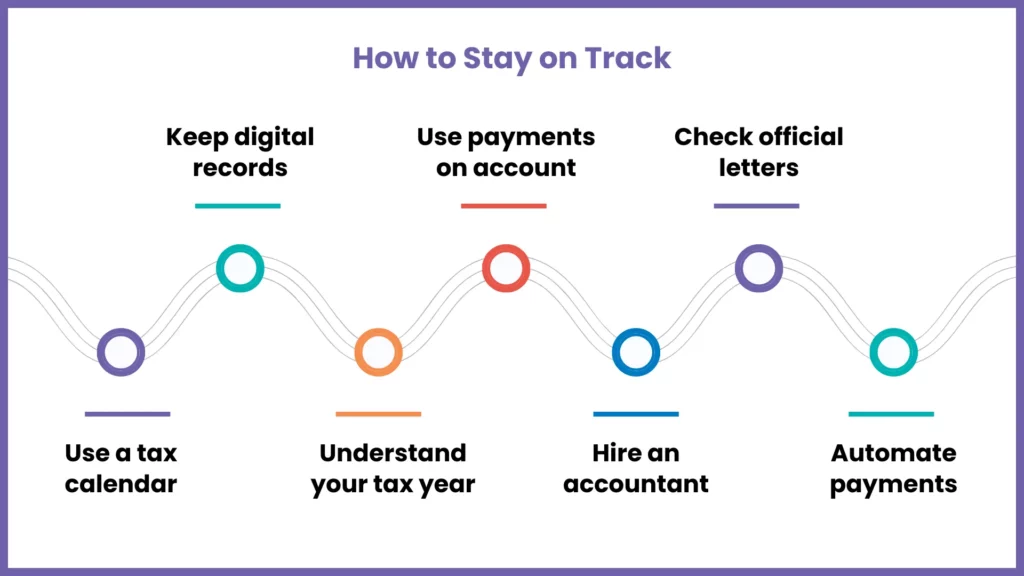
Simple habits stop most deadline slips. Use calendars, apps, or MyIVA alerts tailored for small businesses.
1. Set Up a Deadline Calendar
Keep a clear tax calendar with all key UK deadlines like VAT, PAYE, and Self Assessment. Setting reminders, a couple of weeks in advance helps you prepare documents on time and avoid last-minute rush.
2. Go Digital with Records
Using cloud accounting software keeps your records organised and easy to access. It also helps track upcoming deadlines and reduces the chances of losing important receipts or paperwork.
3. Know Your Tax Year
Understand whether you follow the standard tax year ending on 5 April or a custom financial year-end. This clarity helps you plan filings, payments, and accounts more efficiently.
4. Use Payments on Account
Splitting your tax bill through Payments on Account can make large January payments more manageable. It helps with cash flow and reduces financial pressure during peak tax season.
5. Work with an Accountant
An accountant can handle filings, monitor deadlines, and spot issues early. This support is especially useful for busy small businesses managing multiple responsibilities.
6. Check HMRC Letters Regularly
Make it a habit to open and review HMRC letters or emails promptly. They often contain important reminders, registration details, and payment instructions.
7. Automate Payments
Setting up Direct Debit for taxes like VAT and PAYE ensures payments are made on time. Automation is a simple way to avoid missed deadlines and late payment penalties.
In the end, staying organised, planning ahead, and using simple systems can save both time and money. A proactive approach to tax deadlines helps businesses stay compliant and reduces unnecessary stress throughout the year.
FAQs: Frequently Asked Questions
What happens if I mess up one of the UK tax deadlines?
If you miss a deadline, penalties can start from £100 for Self Assessment, so it is best to pay and file as soon as possible to reduce further interest and charges, and you can appeal if you have a genuine reason with proper evidence.
What’s the next big UK tax deadline I need to know about?
For most people with online Self Assessment, the big one to keep in mind is 31st January. So try to get your records in order well in advance to avoid getting caught out.
Do sole traders have different UK tax deadlines?
Yes, they mainly follow Self Assessment deadlines. However, if they are newly self-employed, they must register with HMRC by 5 October after the end of the relevant tax year.
How do I check my VAT return dates?
Log in to your HMRC online account and it will show your specific VAT return and payment deadlines. This is because VAT quarters are staggered and depend on your registration details
Can MyIVA help with UK tax deadlines?
Yes. MyIVA supports small businesses by sending reminders, helping track deadlines, and ensuring you stay on schedule with your tax payments, which can save both time and unnecessary penalties.
Conclusion
UK tax deadlines require regular attention, but with the right support, they do not have to feel overwhelming. MyIVA simplifies the process for sole traders and small businesses by tracking key dates, sending timely reminders, and supporting filings when needed. This saves valuable time, reduces manual effort, and helps avoid last-minute stress or penalties.
Many small firms also use it to manage client deadlines more efficiently instead of relying on spreadsheets or manual checks.
If you want to stay organised and ahead of every deadline, now is the right time to get started. Sign up for a MyIVA free trial today and manage your tax deadlines with confidence.