
HMRC is getting ready to launch the next phase of Making Tax Digital, called MTD for Income Tax. This will be one of the largest changes to the UK tax system, set to begin in April 2026. It will mainly impact sole traders and landlords who file personal tax.
The goal is to move people from paper records and annual tax returns to a modern digital system that gives HMRC quarterly updates throughout the year. While this aims to simplify tax, many people still don’t understand what will change, who will be impacted, and how to prepare.
HMRC Announces Key Changes for MTD for Income Tax
HMRC has repeatedly extended the MTD for Income Tax rollout period. The plan was supposed to start sooner but has been delayed, putting the system back to April 2026 for the majority of filers. Even though full implementation does not begin until 2026, important updates released for 2025 mean that individuals and small firms should begin preparing now.
Here are three key takeaways from recent announcements:
1. Quarterly reporting will replace some annual updates
Instead of reporting income once a year, most self-employed people and small firms will send updates every three months. These reports will show income and expenses for that period. This system aims to give HMRC a clearer and more accurate view of your tax position.
2. Digital records will be compulsory
HMRC has confirmed that records must be kept using software that can link directly to their digital system. Paper files, spreadsheets or handwritten notes will no longer meet the requirements.
Compatible software must track income, allowable costs and tax categories correctly. Many small firms are already using cloud accounting tools, but those who are still using manual methods will need to switch.
3. MTD will apply to people with income above the threshold.
MTD for Income Tax only affects you if you’re making over £50,000 annually from self-employment and property. This limit was reiterated in several government updates and will be adhered to for the first wave of the rollout.
When Does MTD for Income Tax Start? Key Dates You Need to Know
HMRC has issued specific key dates for the rollout, but people will need to prepare before these dates, particularly if they are not already using digital accounting software.
Here are some important dates to keep track of:
April 2026
MTD for Income Tax is compulsory for individuals who receive more than £50,000 a year from self-employment and property. Affected taxpayers will need to maintain digital records and send updates of their taxes quarterly to HMRC.
April 2027
The rules apply to anyone who earns more than £30,000 from either self-employment or property income. You will adhere to the same digital reporting protocols and quarterly update cadence.
April 2028
The government has set out plans for MTD for Income Tax to apply to individuals with qualifying income over £20,000 from self-employment and property, with more detailed guidance to follow nearer the start date.
January and July each year
Tax payment dates remain the same. Even with quarterly reporting, your tax will still be due in January and July unless HMRC makes changes in future.
Preparing early is strongly recommended because choosing compatible software, moving your records to a digital system and understanding quarterly updates takes time. MyIVA can guide individuals and small firms through the setup, help you understand your tax position, and support both personal tax and corporate tax needs under the new MTD rules.
Who Is Exempt from MTD for Income Tax?
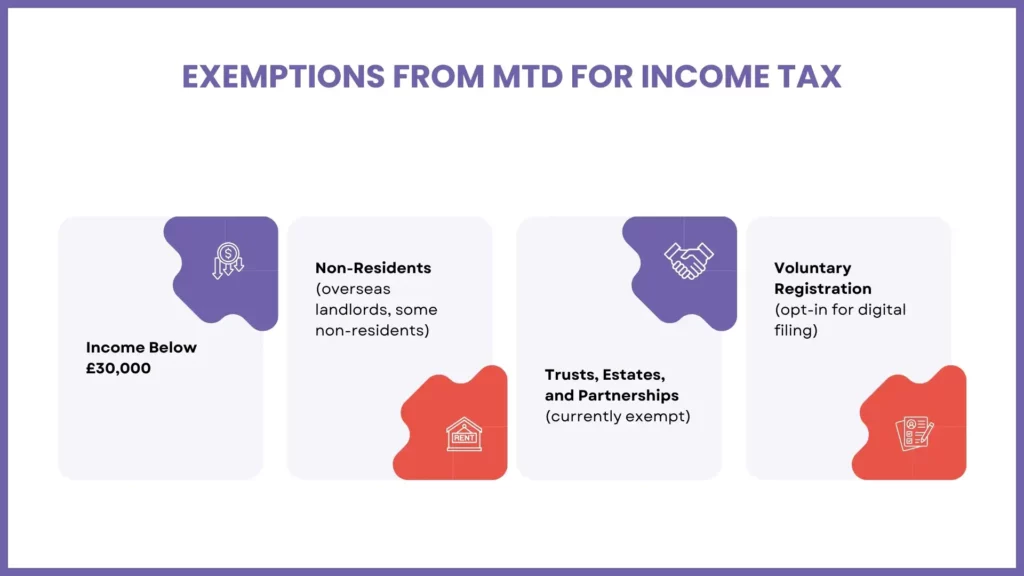
Not everyone will need to follow MTD for Income Tax when it begins in 2026. HMRC has confirmed several exemptions based on income levels and personal circumstances.
Income Below the Threshold
MTD does not apply if your total income from self-employment and property is less than £30,000 a year. HMRC has confirmed that the £10,000 threshold has been replaced by the £30,000 minimum for the first phase.
Non-Residents
Some non-resident individuals and overseas landlords may be exempt, depending on how their UK income is taxed. HMRC will provide guidance for special cases, so it is important to check your status.
Trusts, Estates and Partnerships
These groups are currently not mandated into MTD for Income Tax. HMRC has postponed MTD for partnerships and trusts and has not yet confirmed a new start date for them.
Voluntary Registration
Even if you are exempt, you can choose to sign up early. Many sole traders and small firm owners opt in before they are required to because it helps them get comfortable with digital record-keeping and prepare for future income changes.
MyIVA can help you check whether you fall under the exemptions and guide you if you decide to register voluntarily.
The Benefits of MTD for Income Tax: Why You Shouldn’t Wait to Get Started
Although the change may feel overwhelming, moving to digital record-keeping has clear advantages.
Better accuracy
Digital software reduces the chance of mistakes that often occur with manual records or spreadsheets. This helps prevent errors in personal tax and corporate tax filings.
Easier tracking throughout the year
Quarterly updates help individuals and small firms understand their financial position without waiting for the end of the year.
Reduced risk of penalties
When records are kept digitally and updated regularly, it becomes much easier to meet deadlines and avoid fines.
Faster submissions
Software sends information directly to HMRC, making the reporting process quicker and more reliable.
What You Need to Do Now: How to Prepare for MTD for Income Tax
You do not have to wait until 2026 to begin preparing. HMRC recommends getting ready as early as possible. Here are the steps to take now:
1. Gather your records
Collect invoices, receipts, bank statements and income statements. Clear records make digital migration easier.
2. Choose the right software
Pick an HMRC-approved accounting tool that suits sole traders or small firms. Cloud systems work best for most people and make quarterly updates simple.
3. Register with HMRC
When registration opens for your income group, sign up early to avoid delays and receive your digital reference number.
4. Set up your digital bookkeeping
Start keeping all new transactions in your software so you get used to the process before quarterly reporting begins.
5. Seek support if needed
MyIVA can assist with software setup, digital record organisation and planning for your first submission.
How MTD for Income Tax Will Impact You
MTD will bring day-to-day changes to how you keep financial records, including:
- More frequent record-keeping
- The need for compatible software
- Closer alignment of business and personal tax information
- More visibility of your tax position throughout the year
For small firms, this can improve clarity and reduce stress at year end. For sole traders, it supports better budgeting and forward planning.
What Happens if You Miss the MTD for Income Tax Deadline?
HMRC is introducing a points-based penalty system for late MTD for Income Tax submissions:
- Each missed quarterly update adds penalty points.
- Reaching a set points total triggers a fixed financial penalty.
- Ongoing delays can lead to additional penalties and interest, with thresholds depending on your submission frequency.
The new system is designed to encourage consistent updates rather than last-minute annual submissions. Keeping digital records up to date will help avoid issues.
HMRC’s new digital system starts in April 2026. Need help getting ready? Contact MyIVA now for expert support with setup and compliance!
FAQs: Frequently Asked Questions
What is MTD for Income Tax?
It is HMRC’s digital system that replaces parts of the yearly tax return with quarterly updates filed through approved software
Who must follow MTD for Income Tax?
MTD for Income Tax is being phased in for sole traders and landlords with qualifying income over £50,000 from April 2026, over £30,000 from April 2027, and over £20,000 from April 2028.
Will I still need to file a yearly return?
Yes, but it will be simpler because most information will already be sent through quarterly updates.
Does this affect personal tax and corporate tax?
Yes. Digital records help keep both personal and corporate filings accurate and up to date.
Can MyIVA help with MTD?
Yes. MyIVA supports clients with digital setup, software selection, personal tax returns and corporate tax planning.
Conclusion
MTD for Income Tax marks a major shift in tax reporting in the UK. With quarterly updates, digital records, and new reporting rules, preparing early is key so the transition is smooth, not stressful.
By choosing the right software, organising your records, and registering ahead of time, you can meet HMRC’s deadlines easily. MyIVA is here to help individuals, contractors and small firm owners manage the process and stay confident and compliant as 2026 approaches.